

Kansas Municipal News
Johnson County will lease 50 shuttle buses for 2026 World Cup
In an effort to secure rides for thousands of FIFA World Cup visitors before prices go up, Johnson County commissioners have agreed to lease fifty shuttle buses for two summers from now. The fleet of 50 Ford F650 Glaval Concorde III vehicles — which each can carry up to 35 passengers each — may not totally cover the county’s transit needs while the international tournament is in town in 2026, but “it was as many as we could get,” said Josh Powers, the county transit director.
Source: Johnson County Post
City of Lawrence to close camp behind Amtrak Station
The City of Lawrence announced Friday that it is closing the camp where people are living behind the Amtrak Station in East Lawrence. “The City’s Homeless Response Team began working with individuals staying at the camp several weeks ago and informed them today that the camp must be vacated by Tuesday, Oct. 15,” according to a news release from the city. The city in fall of 2022 opened its sanctioned camp behind Johnny’s Tavern in North Lawrence. That camp was also the first major camp the city closed, effective in April. Some people have been living in the woods near the Amtrak station for years; some moved there after the city-sanctioned camp was closed. Some advocates and residents of the camp have said they feared once the city-sanctioned camp was closed, Amtrak would be next. “Helping the individuals relocate can be a time-intensive project as the Homeless Response Team is focused on finding the best solutions for each individual’s or family’s needs,” according to the city’s release. “Over the next two months, campers will be supported with wrap-around services to aid in their recovery from homelessness and get connected to shelter or housing.” “The goal of this effort is to help each person living at the camp exit unsheltered homelessness by October 15,” the release continued. “Investments in the multi-disciplinary Homeless Response Team, which allowed team members to begin forming relationships and understanding the needs of these individuals, and expanded shelter capacity make this effort possible.”
Source: The Lawrence Times
Humboldt to celebrate new school buildings
USD 258 will have a ribbon cutting ceremony Wednesday for its new elementary school classroom wing and technology building. The district also laid out its budget for next year. School officials will cut ribbons Wednesday to mark essential completion of a new classroom wing and technology building within Humboldt USD 258. The ribbon cutting ceremonies will be at 6 p.m. at Humboldt Elementary School, which is getting the new classroom wing, bus lane and parking lot. The ribbon cutting for the new technology building will be at the high school at 6:30, Superintendent of Schools Dr. Amber Wheeler said. An open house is expected in early 2025, after the rest of the work encompassing the $17.5 million bond issue is completed. Wheeler expected the rest of the work, including replacing an elevator at the high school, replacing and renovating the heating and cooling systems and new fire alarms and roof work, to be done by the end of the year. CONSTRUCTION progress was a centerpoint of Monday’s USD 258 Board of Education meeting, Wheeler said, although board members approved a few other items. They hired Penny Herder, Klhoeigh Shaffer and Anya Woods as paraprofessionals at HES. Board members also scheduled a Sept. 3 budget hearing to discuss the district’s 2024-25 spending plan, which would be supported with an ad valorem tax levy of about 55 mills. That levy is a full mill lower than this year’s levy of 56.469 mills. That’s because of a slight decrease in the levy for USD 258’s local options budget, from 14.7 to 13.8 mills. Combine that with the 20 mills assessed for general fund obligations, another 8 mills for capital outlay projects and 13.5 mills to pay for the aforementioned construction projects, and you have a projected total of 55.339 mills, although that number may change a smidgen once final assessed valuations are determined later this fall.. That means the owner of a $100,000 home would spend about $636 to support USD 258 for the fiscal year. That figure does not account for property taxes to support other entities, such as the City of Humboldt, the county or Allen Community College. And while the mill levy should be slightly lower, the total tax dollars generated will increase, because of an uptick in the school district’s assessed valuation.
Source: The Iola Register
New law gives county more power to go after nuisances
The Riley County government will now have more power to go after local nuisances in unincorporated areas, something that has been a long time coming, local officials said. Senate Bill 384, which Gov. Laura Kelly signed in April, sets up procedures for the removal and abatement of nuisances in the unincorporated areas of the county. Riley County deputy county counselor Bryant Parker said Thursday the bill will give the government more authority to stop nuisances from going unaddressed.
Source: 1350 KMAN
JC commission weighs making its own website the ‘city newspaper’ to save money
The Junction City Commission this week considered establishing the city government’s own website as the “city newspaper” to avoid paying for the publication of legal notices. Three commissioners — Pat Landes, Jeff Underhill and Ronna Larson — expressed support for the idea and asked city attorney Britain Stites to provide more information on website visits and how much the city government would save by doing it. Currently, The Junction City Union is the official city newspaper. “What has happened, in the last 20 years, the internet and online publications have affected the paper press,” Stites said. “Not saying it’s good, not saying it’s bad; but that has been the reality of the market there. The reality is, their prices have gone up, but the readership has gone down — so if we publish things in there, are people really getting notice? The charter ordinance establishing the city website as their newspaper would require publication in the newspaper and to go through a protest period so it’s not a one-and-done thing or easy to do.” Stites said the city spends “hundreds if not thousands of dollars a year” on public notices. Because The Union is weekly, he said publishing notices that way also limits them on their time frame. He asked some questions on how the newspaper switching to a magazine format would affect deadlines. He also did not contact The Union before putting this on the agenda. Legally, governments have no control over the format of newspapers, which are necessarily separate (usually private) entities because they report on governments. Pinaire expressed opposition to the idea, saying having a community newspaper is valuable and doing this would “cut the knees off of the newspaper.” “I think the quality of the journalism has improved and so have the pictures, and it’s a valuable tool for the community,” Pinaire said. “This is our only newspaper,” Pinaire said, adding that communities across the nation that have lost their newspaper have set up non-profit organizations to replace them. “I think we need more support of the newspaper, not less. It’s been a rough business, sure, to survive, and we’ re not going to help it by that approach.”
Source: themercury.com
Microchip requirement among new animal regulations in Wichita
Pet owners in Wichita will have to have their dogs and cats microchipped under new animal regulations that are going into effect in Wichita. The requirement is one of several recommendations made by the city’s Animal Services Advisory Board, and the recommendations have been approved by the City Council. Jan Jarman with the city’s legal department said the requirement will be hard to enforce, but it’s important to have pets microchipped because that helps in returning lost pets to their owners. She said the city will be doing outreach activities to make people aware of the requirement. The Wichita Police Department recommended a number of changes to the city’s animal laws: Increased fines for dog bite convictions with a first-time bite increasing from a $250 mandatory fine to a $500 fine, a second offense from a $500 fine to a $1,000 fine, and a third offense from a $1,000 fine to a $2,500 fine; Removal of mandatory dog pen requirement for dangerous dogs, leaving the determination to the discretion of Animal Services; Require microchip on all dogs and cats at the age of five months, unless a veterinarian advises that it is not in the best interest of the animal; Simplify pet licensing prices to $15 for spayed/neutered and $50 for those that are not. This is not an increase for spayed or neutered pets but is a $15 increase for those that are not; Simplify veterinarian requirements regarding vaccination and license information that is transferred to City Licensing; Allow licenses to be purchased for length of a rabies vaccine, up to three years; Allow three dogs/three cats per household. An animal maintenance permit will be required for four; Allow a dangerous dog to be cared for by an animal professional for evaluation; and The licensing provisions will take effect January 1, 2025, due to necessary computer upgrades.
Source: 101.3 KFDI
Belle Plaine arboretum gets mural grant
Through the Kansas Department of Commerce and Kansas Arts Commission, Belle Plaine’s Bartlett Arboretum was recently awarded a Public Arts and Murals grant to install a new mural at the front gate. Highlighting natural floral and fauna, the mural is intended to hint at what’s within the arboretum, with Wichita artist Elisabeth Owens transforming the entrance into a display of arboreal delight. Owens has completed murals along Wichita’s Douglas Avenue, been exhibited at the Wichita Art Museum and participated in Art at the Arb. Plans are to debut the mural during TreeFest on Nov. 10.
Source: Derby Informer | Area
Mulvane set for Old Settlers festival
An end-of-summer tradition, Mulvane is getting set to host its Old Settlers Days festival from Aug. 22-25. The theme for this year’s 151st iteration is “Party by the Pix.” Starting out as a community picnic, the annual festival has grown to include a number of events focused on “preserving the past and building for the future.” Festivities planned for this year include the traditional parade, rodeo, talent show, carnival, a pair of street dances and more.
Source: Derby Informer | Area
Preserving historic cemeteries around Kansas
Director of the Riley County Historical Museum Katharine Hensler joins the 27 News Morning crew with a look into the museum’s cemetery preservation program.
Source: KSNT 27 News
Commission agrees to grant $2,500 to 22 day cares
Labette County commissioners agreed to fund some improvements for 22 day cares in the county on Monday. The money came from the federal American Rescue Plan Act, a COVID-19 economic stimulus package. Jim Zaleski, Parsons’ economic development director, and Laura Moore, the city’s community development director, oversee the ARPA program for the county. The county had $40,000 left in the fund designated for day cares so Zaleski and Moore asked for requests from day care operators. The 25 requests totaled $218,014 and included projects from play equipment and fencing to expanding day care space. Zaleski and Moore suggested eliminating the three largest project requests, ranging from $24,500 to $40,000, because funding those would leave nothing for the remaining facilities. He said most of the remaining requests were for projects totaling $2,000 to $3,000 but some requested larger amounts. He and Moore suggested funding 22 projects at $2,500 each. This would wipe out the county’s fund so the city would kick in $15,000 from its ARPA money designated for day cares. This would provide some funding for all 22 projects. Four of the 25 requests came from day cares that are awaiting a state license, two of them were eliminated because of project size and two of them remain and will be funded as long as their state licenses are issued. “I think that sounds pretty fair,” said Commissioner Vince Schibi. Zaleski said while the $2,500 may not be the amount requested the infusion still will offer support to the businesses. Zaleski also updated commissioners on the former Katy Hospital, which is owned by Labette Health. He said there will be a discussion in the future to assess the structure at market value, which may help find a developer interested in the property. The hospital is on the National Register of Historic Places. Schibi said a development deal fell through in the past related to insurance and taxes on the property. In other matters, the commissioners: — Heard that the county tax sale may be in October. County Counselor Brian Johnson said the petition started with 460 properties and that’s been whittled down to 315 as property owners redeemed the parcels to avoid losing them in a sale. He said about a third of the parcels have been in numerous tax sales before because they are smaller lots, some of them 5 feet in width, or they are in the floodplain. — Approved a contract renewal with Fred Rinne to continue running the Local Emergency Planning Committee meetings and updating the emergency plan. He is paid $1,500 a month. One contract took Rinne’s employment to the end of the year and the other contract was for 2025. — Heard about needs in the Labette County Jail. A wall repair turned into a rebuild because of water issues and deterioration found. This damage relates to a dishwasher that the facility will replace in the next six to seven weeks at an estimated cost of $22,000. Other upgrades of aging equipment will include a garbage disposal and washer and dryer. The jail cells also need improvements, including prison-grade lighting. The sheriff’s office received a federal grant for jail projects several years ago. That and other county funding will help pay for the needed repairs and purchases. A water leak from where two roofs overlap is also needed. Rainwater pours into the jail because of a leak at the confluence of the roof lines. — Visited with Melody Kikkert, the county appraiser that Montgomery County shares with Labette, about her first week in office. She said the current staff in the various departments are doing a “phenomenal” job. Some employees are wanting to get extra training to help the office in the future. Kikkert said she’s also looking for ways to save money going forward.
Source: Parsons Sun
WyCo, KCK officials warn of impacts to public services after sweeping budget cuts
Less than two months after a decision to cap property tax revenue, Unified Government of Wyandotte County and Kansas City, Kansas, commissioners passed budgets Thursday with significant cuts to city and county services that will take shape next year. Over the past two weeks, local government leaders identified roughly $15.4 million in spending to carve out. Reductions were necessary, according to top staffers, as costs will naturally rise to meet contractual obligations, employee cost-of-living raises and inflation. No public employees will be laid off or furloughed, according to county administration. Dollars were saved in large part through the reductions of unfilled positions, overtime, capital projects and some programs. Earlier this month, County Administrator David Johnston outlined a proposed budget that curtailed roughly $4.6 million in mostly personnel expenses for police, firefighters and sheriff’s deputies. He also warned commissioners there was no wiggle room, and any restorations of funding would require a decrease elsewhere. Other cuts include parks and recreation, which will see its operating budget scaled back by $750,000. Savings will come through reduced maintenance, including less frequent lawnmowing on publicly-owned property. The public works department is set up to see $790,000 in cuts from open jobs and fleet maintenance. And the Neighborhood Services Center will be cut by $620,000, raising concerns among area neighborhood leaders over volunteer and community service programs. Another item on the chopping block is public transportation. Federal COVID-19 pandemic relief funds will dry up next year, leaving a $2.4 million shortfall the Unified Government may close with the elimination of two bus routes run through the Kansas City Area Transportation Authority. The cuts are driven by a 9-0 decision commissioners made in June to adopt a so-called revenue neutral budget. In 2021, the state created new mandates for local governments that require a more extensive public engagement process whenever residents are expected to see any increase on their property tax bills. Residents have long been pressuring commissioners to do something about rising property taxes, including some who say they’re being taxed out of Wyandotte County. While tax rates have stayed largely flat, increases have been felt by homeowners as property values have risen substantially due in part to a housing shortage. Mayor Tyrone Garner, who has advocated for property tax relief throughout his first term, acknowledged Thursday the budget will not lead to a reduced cost for taxpayers. And he relied on a few words once famously delivered by former President John F. Kennedy during his 21 minutes of closing remarks on Thursday. “I have to challenge our residents as well when we talk about shared sacrifice,” the mayor said Thursday in a wide-ranging speech that touched on hopes for efficiencies in local government, an improved business climate and lower costs for residents overall. Other actions taken Thursday by commissioners concern the public utility bills residents will see next year. The Board of Public Utilities PILOT collection, or payments in lieu of taxes, will decrease from 11.9% to 10.9% for residential customers only. The rate will stay the same for commercial businesses and nonprofit organizations. Sewer increases are meant to address infrastructure investments needed to comply with the federal Environmental Protection Agency’s consent decree. The fee is set to rise by 4%. Trash collection will increase by $1.07 per month, totaling $19.01 per month, to meet step increases with the local government’s contract with private company Waste Management. The higher fee is also meant to keep other trash disposal programs run by the city and county government afloat.
Source: KC Star Local News
A Kansas photographer is documenting sports in every county in the state
Jeff Jacobsen spent decades as a photojournalist and as a photographer for University of Kansas athletics. Since he retired in 2020, he’s been working on a project to capture images of sports in all 105 counties in Kansas — and he’s almost done. When Jeff Jacobsen retired in 2020 after decades as the athletic department photographer for the University of Kansas, he found himself looking for one more challenge. So he decided to visit every county in the state to document sports. Four years later, the Heart and Soul of Kansas Sports project is nearly complete. Only eight out of Kansas’ 105 counties remain to be photographed. Among the activities documented: a cyclist’s attempt at the hour record at the Lawrence Grass Velodrome, the Pratt Community College’s rodeo team, and plenty of high school prep sports. To Jacobsen, sports are a unifier, an activity that brings people together across differences in contentious times when people often can’t agree. And featuring Kansas, a state he says is often overlooked, is special too. “So many people in the state, I believe, feel that they’re forgotten,” Jacobsen told KCUR’s Up To Date. “Newspapers aren’t as prevalent. Television doesn’t cover the sports as much as they used to, in a sense, and when somebody shows up and seems to care and wants to do document this, they just roll out everything they possibly can. And it’s been a thrill to to meet everyone I’ve met.” Once he’s finished the photography portion, Jacobsen plans to compile the images he’s taken, along with video interview, into a larger multimedia documentary that he’ll tour around the state. Photos from the Heart and Soul of Kansas Sports project are available to view here.
Source: KCUR
Low-income Kansans are going into debt because unpaid traffic tickets rack up interest
Unpaid traffic tickets can end up costing low-income Kansans thousands of dollars when cities send unpaid fines and fees to collection agencies and add interest on top. Critics say the system is unfair to lower income Kansans who already could not afford the initial fine and courts should consider alternatives to monetary punishment. It’s also unclear if it’s even legally allowed under Kansas law. Proponents of the system argue it is legal, and communities need to be able to add interest to make sure some drivers who ignore traffic laws don’t go unpunished. Kansas Legal Services, a nonprofit legal agency, helps people like Kuykendall negotiate lower fines in Topeka courts when their debt spirals out of control. The Topeka Municipal Court sends unpaid debt to a collection agency, CBK Inc., which has a contract with the city. That contract allows the collection agency to add a 30% fee on top of the debt as a service charge, according to a contract obtained through the Kansas Open Records Act. Micah Tempel, an attorney for Kansas Legal Services, knows other municipal courts use collection agencies that add fees on top of the original fine, like Olathe and Wichita. That means low-income drivers across the state are likely facing similar debt. In Topeka, Tempel said the court also adds up to 12% interest annually. He argues tacking on those fines and interest fees is unfair to low-income drivers. “We have clients who couldn’t afford originally,” Tempel said. “They definitely can’t afford the thousands of dollars that it’s turned into.” Tempel also questions if it’s even legal to add interest on court fines and fees because there does not seem to be a state law that directly permits it. But there has not been a court ruling that sifts through that legal gray area. Tempel said he would like to challenge the practice through court appeals that would likely take a ruling from the Kansas Supreme Court to settle the issue. But none of his cases have gone that far, because Topeka has offered to wipe away his clients’ debt. That also means the city is not taking a strong stance on their interpretation of the law, either. But those settlements mean less time in the courtroom for Tempel’s clients and they also come with other certainties, like drivers getting the licenses back. Officials for the City of Topeka declined to answer questions about using a collection agency and adding interest on traffic court fines and fees. John Goodyear is legal counsel for the League of Kansas Municipalities, of which Topeka is a member. He said it’s common for municipal courts to use collection agencies on unpaid tickets to get some drivers to finally pay up. He said it’s a legally sound practice, as state law specifically allows courts to use collection agencies. The statute stipulates collection agencies can add a service fee up to 33% of the amount collected. It also mentions adding interest, possibly meaning it’s legal, too. However, Goodyear said his organization is also supports courts lowering fines and fees for people who are making a good-faith effort but are struggling to pay back the debt. He said courts should look at each case individually and make a determination on what is best — whether that’s providing relief to low-income drivers or tacking on interest for drivers who can pay it and continue to skirt the law. Meanwhile, Kansas lawmakers have made recent changes to the state law, making it easier for people with outstanding fines to get a restricted driver’s license. The most recent law, which goes into effect in January, provides relief by consolidating and reducing fines and fees drivers need to pay to get their license reinstated. Curry recommends communities use different ways to hold low-income traffic violators accountable, like sliding fee scales based on a violator’s income or community service instead of fines. Otherwise, cities like Topeka are using fines and fees to fund their government and that poses an excess burden on low-income residents, Curry said.
Source: KLC Journal
Watch out, pickleball: Growing sport arrives in Kansas City area. More courts are coming
It’s kinda like tennis, kinda like squash. Padel is gaining popularity in the United States, though for decades it’s had a presence in Spain, Argentina, Mexico and several other countries. But until now, the Kansas City area hasn’t had padel courts. Then along came six current and former Sporting KC players. Teammates Roger Espinoza, Andreu Fontas, Uri Rosell, Johnny Russell, Daniel Salloi and Graham Zusi partnered with engineer Jamie Mahoney to create their new venture, La Casa del Padel. Last week, they opened two padel courts at the Overland Park Racquet Club, 6800 W. 91st St. “We were surprised to see how many people are already hooked on the game from day one,” Salloi said. “The reaction’s been great.” The sport, invented in Mexico in 1969, is played on a small court encased in glass. If the ball hits the ground, then the wall, it’s still in play. (Hitting the wall first is not allowed.) “It becomes very exciting as you have to always turn and look for new angles as the ball bounces back,” Salloi said. The game is played in doubles, and its scoring system is similar to tennis. The racket is shorter and doesn’t have strings. Players can book a time to play at lacasa-delpadel.com. They don’t need to be a member at the Racquet Club to play. “We understand a lot of people will want to be involved because they are Sporting fans … but that’s OK,” he said. “We really believe that they will love it.” Even more good news for padel-lovers: The soccer players aren’t finished growing the sport. They’ve filed an application to build four indoor courts and two outdoor courts at a brand new, nearly 17,000 square foot facility at 77th and Floyd streets called Padel KC. Plans include a bar and restaurant with an outdoor patio. The Overland Park City Council approved their plans earlier this month. A restaurant inside the facility is also included in the plans. Salloi said that project is still a ways out and couldn’t comment further on it. La Casa del Padel began with Fontas, who’s from Spain. He’s been a longtime fan of the game. “You see padel courts in Spain, every corner around the city,” Salloi said. Fontas introduced his teammates to the sport about a year ago, and they were hooked. Together, they began looking for ways to grow the sport. There aren’t many opportunities to play in the Midwest. The closest padel court is in the St. Louis area — Padel + Pickle in Olivette. It just opened this year. But Salloi hopes both his projects not only satisfy a niche in the market, but encourage others to give the game a try. He’s been impressed with how quickly Kansas City padel players have forged friendships. “We’re trying to create a hub for the community,” he said. “It’s amazing how people … are OK with meeting new people, trying to challenge them for new games.”
Source: Joco 913 News
Halstead Market feeds the town for many years
Forty-seven years. That’s how long Russ Friesen of Halstead has worked at and/or owned Halstead Market. He began working there at age 16. “Started out as a carryout boy, and then he went to meat cutting,” his wife and other co-owner Charlene Friesen said. Now, he’s 63. The Halstead couple purchased the business in 2003, and they added a bakery to their endeavor in 2010. The bakery has the scent of sugary treats floating on the air, and there’s an entryway through which people can get to it through the market or they can use the bakery’s front door. There, they make cinnamon rolls from scratch, and the flavors include caramel pecan, cinnamon and raspberry. The raspberry rolls are the only ones without cinnamon. They also sell a variety of other pastries, like donuts and long johns. They get those pre-fried, and then they bake and frost them. There’s a register in the bakery, so people can pay there or in the market. They also sell coffee to go along with the sweet treats. Other items they bake include a variety of cookies like chocolate chip, peanut butter, oatmeal chocolate chip, snickerdoodles, monster cookies and sugar cookies. Since there’s no flour in monster cookies, they’re gluten-free. Other items include yeast breads. They’re usually done baking by around 1 p.m. The larger part of the store has a full line of groceries including pharmacy items, dairy, meat, produce, canned goods, bottled water and soft drinks. That part of the store takes up about 5,000 square feet. “Pretty much what you see in any grocery store,” Russ said. “We cut our meat and package it and sell it at our meat case.” Whatever breakfast sweets don’t sell, around noon they package them up and have them for sale on a shelf. They also carry area-made items like peppernuts from Durham, coffee from Inman, honey from Hesston and flowers from near Halstead. In 2019, they put in all-new freezer, dairy, meat and produce cases. “It changed the looks a lot,” Russ said. “More efficient too,” Charlene said. Not counting the Friesen couple, the market has 10 employees with two of those being full time. Currently, they have a full staff but that can change, Russ said. “We enjoy the customers and being of service to them,” Russ said. “It’s fun being here for the community, and you just know your customers on a daily basis,” Charlene added. “It’s special to see the community support us.” Sometimes, customers shop once a day, while others go in once a week. Russ and his wife put in a lot of hours, he said, adding he works 10 to 12 hours a day. The couple has three children, one of which is Jana Friesen, who manages the bakery, and all three worked there as teens. The couple also has six grandchildren. Halstead Market is the only grocery store in town. “We really appreciate the support we get from those that do their shopping here,” Russ said. Having their store is important to them, Charlene said. “We want to keep our grocery store since so many have closed in the other towns,” she said. “It seems like a day brightener to have our customers become our friends. They’re here for us, and we’re here for them. Nice having conversations with customers. It’s a pleasure to be able to serve them when they support us.” A big seller is their German sausage, which they make themselves. “The steaks would be a big item,” Russ said. “We cut those here also.” Other popular sellers include ground beef, pork chops and chicken. They get business not only from Halstead but from other towns like Sedgwick and Burrton, which used to have grocery stores. Russ said the grocery store moved to its current location at 145 Main St. in the mid-’60s. Before that, it was catty-cornered to the current location where the chiropractor’s office now is. He wasn’t sure when it opened there. “People are glad we’re here,” Russ said. “They appreciate us being here.” Charlene said people appreciate that they don’t have to drive to Newton to get their groceries. Customers aren’t the only ones who buy groceries. The place where the Friesens purchase their groceries for the store is Affiliated Foods in Amarillo, Texas. “They have a bakery,” he said. “They bake the bread that we sell. They bottle the milk there. They do bottled water.” It’s pretty handy getting all their groceries on one truck that delivers to them twice a week, Charlene said. Their busiest time of year is Thanksgiving and Christmas, and they sell turkeys at that time. Since they’re busy with their store and home, neither Friesen has a hobby. “Trying to keep the home fires burning,” Charlene said. Store hours are 7 a.m. to 8 p.m. Mondays through Saturdays, and the bakery is open those hours except Mondays.
Source: Harvey County Now
Municipal Bond Trends for August 16, 2024

The interest rate table above illustrates recent changes in a sample of AA rated bond trades reported to the Municipal Securities Rulemaking Board’s EMMA® system. Every issuer’s credit is different, and other financing sources may be available. To obtain comprehensive Financial Advisory services for your local government, contact your Ranson Financial Municipal Advisor, Larry Kleeman, or Henry Schmidt.
Municipal Bond Trends for August 15, 2024
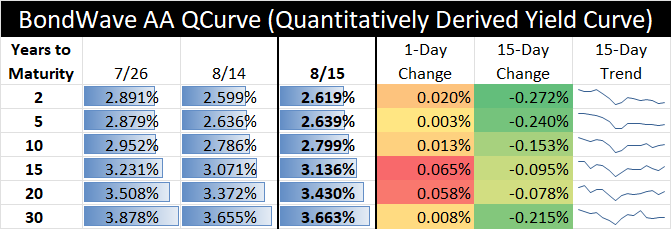
The interest rate table above illustrates recent changes in a sample of AA rated bond trades reported to the Municipal Securities Rulemaking Board’s EMMA® system. Every issuer’s credit is different, and other financing sources may be available. To obtain comprehensive Financial Advisory services for your local government, contact your Ranson Financial Municipal Advisor, Larry Kleeman, or Henry Schmidt.
Ohlsen vs. City of Seneca (zoning reasonableness)
The City of Seneca (the City) and the Board of Zoning Appeals of the City of Seneca (the Board) granted a conditional use permit (CUP) to Ag Partners Cooperative, Inc. (APC) after a public hearing. Brett Ohlsen—the owner of neighboring property—sought judicial review of the Board’s decision. The district court found he failed to prove the actions of the Board were unreasonable under K.S.A. 12-760. Ohlsen now appeals the district court’s decision and argues this court should overturn the Board’s granting of the CUP because its decision was unreasonable. But while Ohlsen points to some instances where the Board may not have strictly followed the City’s procedural ordinances, he has not met his considerable burden to show the Board’s grant of the CUP was so arbitrary that it was taken without regard to the benefit or harm to the community or was so wide of the mark that its unreasonableness is without debate. We affirm the district court’s decision.
Source: Kansas Court of Appeals
JC commission weighs making its own website the ‘city newspaper’ to save money
The Junction City Commission this week considered establishing the city government’s own website as the “city newspaper” to avoid paying for the publication of legal notices. Three commissioners — Pat Landes, Jeff Underhill and Ronna Larson — expressed support for the idea and asked city attorney Britain Stites to provide more information on website visits and how much the city government would save by doing it. Currently, The Junction City Union is the official city newspaper. “What has happened, in the last 20 years, the internet and online publications have affected the paper press,” Stites said. “Not saying it’s good, not saying it’s bad; but that has been the reality of the market there. The reality is, their prices have gone up, but the readership has gone down — so if we publish things in there, are people really getting notice? The charter ordinance establishing the city website as their newspaper would require publication in the newspaper and to go through a protest period so it’s not a one-and-done thing or easy to do.” Stites said the city spends “hundreds if not thousands of dollars a year” on public notices. Because The Union is weekly, he said publishing notices that way also limits them on their time frame. He asked some questions on how the newspaper switching to a magazine format would affect deadlines. He also did not contact The Union before putting this on the agenda. Legally, governments have no control over the format of newspapers, which are necessarily separate (usually private) entities because they report on governments. Pinaire expressed opposition to the idea, saying having a community newspaper is valuable and doing this would “cut the knees off of the newspaper.” “I think the quality of the journalism has improved and so have the pictures, and it’s a valuable tool for the community,” Pinaire said. “This is our only newspaper,” Pinaire said, adding that communities across the nation that have lost their newspaper have set up non-profit organizations to replace them. “I think we need more support of the newspaper, not less. It’s been a rough business, sure, to survive, and we’ re not going to help it by that approach.”
Source: 1350 KMAN
Sedgwick residents lend a hand digging out from major windstorm
A strong summer storm blew through Wednesday evening, with Sedgwick receiving the brunt of the damage. The National Weather Service stated that the storm had winds between 60-70 miles per hour. The Sedgwick Area reported uprooted trees as well as downed power lines. “It pretty well rained down fury over here,” Sedgwick City Administrator Kyle Nordick said. Once the storm moved through the city crews as well as the fire department got to work putting up barricades and dealing with damage. “We got to town at 10:30 and didn’t stop until 3 a.m.,” Nordick said. He added that they got about three hours of sleep and continued cleanup in the morning, with plenty of help from residents. All of our community members have done a phenomenal job,” he said. “It was absolute civic pride and community and that is exactly what we shoot to build here in Sedgwick.” The storm left many without power including businesses as well as the school, which canceled classes for Thursday. The doors to the Sedgwick Dollar General were also damaged and the store was closed Thursday morning for repairs. Power was restored to much of the town in the morning and early afternoon. As of 3:50 p.m. Aug. 15, Evergy reported 205 customers without power in Sedgwick. Nordick said that power lines and limbs were still in the process of being picked up.
“I’ve got two different contractors working here,” Nordick said. He added that Halstead also sent a crew of workers to assist the Sedgwick. Nordick asked anyone willing and able to take limbs down to the city burn pile. He also said that the contractors would be picking limbs up from the curb Friday. He said they would pick up limbs placed on the side of the road. The storm was part of a long line of weather to move through the area. At the peak, the storm had knocked out power for 37,000 customers, and there remain outages in small areas throughout Harvey County. This is the second windstorm this year to do major damage locally. A May storm tore down trees across Harvey County and hit Halstead and Newton especially hard. Nordick said that the storm had spared Sedgwick from major damage. “I guess it was our turn,” he said.
Source: Harvey County Now
Lenexa recommends denying a crucial permit to operate Johnson County homeless shelter
The city of Lenexa is recommending that officials deny the request for a special use permit to operate a homeless shelter, potentially throwing a wrench in Johnson County’s ability to close on the sale of the hotel it wants to convert in a tight timeline. Last month, reStart, Inc., the Kansas City-based homeless services organization selected to own the site, submitted to the city of Lenexa an application for a permit to operate the hotel building as a shelter. Johnson County has committed roughly $10.5 million in federal funds toward purchasing and renovating the La Quinta Inn and Suites off of Interstate 35 and 95th Street. The permit is required to both close on the real estate purchase and to run the shelter. But the county and reStart are now facing a major roadblock as city staff has informed officials of the intention to recommend the application be rejected. Denise Rendina, city spokeswoman, declined to provide details explaining why the city is recommending the permit be denied. She said more information will be released next week, ahead of the planning commission considering the application at its Aug. 26 meeting. The council would vote on the request next, at its Sept. 17 meeting. It’s unclear what criteria reStart’s application fails to meet, or how easily the organization could address the city’s concerns. Denial of the application could at least send officials back to the drawing board, pushing back the county’s ambitious timeline for closing on the sale and opening the shelter as early as next year. Part of the timeline hinges on the county’s deadline to spend federal COVID-19 relief funds, the money officials have dedicated to getting the project done. “The county believes that the proposed Homeless Services Center will meet a known community need and will benefit vulnerable populations throughout Johnson County. We also recognize this is a bold new approach, and therefore reStart and the county have worked diligently to address all questions and concerns raised by the city so far and will continue to do so,” Johnson County spokeswoman Anne Christiansen-Bullers told The Star in an email. “We appreciate the ongoing collaboration with City of Lenexa staff throughout this process, and we respect the work they do on behalf of residents. The City of Lenexa is on the front line of meeting this community need.” Lenexa officials consider special use permits using specific criteria, including the character of the neighborhood and how the project will affect nearby properties, the suitability of the property for the type of development, and gain to public health and safety. Lenexa added homeless shelters as an allowable use in its city code a few years ago, which made it possible for the nonprofit Project 1020 to operate its temporary winter shelter out of a church, plus laid out regulations for a potential permanent shelter. City officials made the move after Shawnee Mission Unitarian Universalist Church sued the city and won for its right to house the winter shelter.
Source: Joco 913 News
Roeland Park drafts revised tree rules a year after voting down previous version
The city of Roeland Park is getting closer to adopting a long-discussed tree preservation ordinance. Following years of work inventorying the city’s tree canopy and hosting local ward meetings to discuss proposed rules aimed at preserving it… The draft lays out protections for right-of-way trees — that is, trees in public strips of land between residential properties and the street — as well as trees in private front yards.
Source: Johnson County Post
Overland Park wants to clean up this city lake. The process is ‘kind of stinky.’
Overland Park intends to improve the water quality in its lakes, including Regency Lake in the city’s southern half this year, by dredging sediment from the lake floors. But city staff warn the process is likely to be disruptive — and probably a little stinky — for residents who live near the lake.
Source: Johnson County Post
Redevelopment plan could put affordable housing next to Panasonic
The rehabilitation of World War II-era housing could lead to more affordable options near Panasonic’s 4,000-job electric-vehicle battery plant in De Soto. Wheatland Investments Group submitted an application to the city to create a Kansas Rural Housing Incentive District (RHID) covering the Clearview Village apartment complex at 36000 W 103rd St. Clearview Village, formerly known as Sunflower Village, was built in 1943 to meet the housing needs of military members working at the Sunflower Army Ammunition plant. The housing complex sits across from Panasonic’s $4 billion, 4.7-million-square-foot plant on the opposite side of 103rd Street. The ammunition plant was decommissioned in 1992, but the housing development remained. In 2014, the property was listed on the National Register of Historic Places to tap historic tax credits. According to the RHID application, roughly 9% of De Soto’s almost 6,500 residents live at Clearview. The developer plans to renovate 242 existing apartments and build 99 new units. The project is estimated to cost $55 million, including about $24 million in infrastructure upgrades. An RHID allows a city to steer property tax gains created by a new development to pay for eligible infrastructure improvements. At Clearview, those improvements would include: Repairing and replacing storm and sanitary sewers, Replacing water lines, Installing fire hydrants, Adding a water connection point on Sunflower, and Road Resurfacing and repairing streets in the project site. The proposed RHID is expected to generate approximately $13.7 million over a 25-year term. In May, the project was awarded a 4% Low-Income Housing Tax Credit from Kansas Housing Resources Corp. After the renovation, all units in the complex will be converted to affordable housing, with rents earmarked for tenants earning between 30% to 80% of the average median income. A lagoon system is being used for sewer treatment for Clearview residents. In July, the city approved a request from Sunflower Redevelopment Group to create a special benefit district to install a new sewer line to serve the former Sunflower Army Ammunition plant property, now known as Astra Enterprise Park. The $10.6 million line will stretch about 2.8 miles from north of 95th Street southwest toward Astra Parkway and will be paid for using a special assessment levied against property owners in the district. A $60,000 special assessment would be levied against the Clearview property annually to pay for the new sewer line. If the new sewer line is not installed by the time the first new Clearview apartment is complete, the developer wants the city to approve plans for a new wastewater lagoon to be used at the site for three years before tying into the wastewater system. The City Council has not yet set a date to vote on Wheatland’s incentive application. If plans are approved, the developer would begin work in January, with construction expected to wrap up by June 2027. The renovation of Clearview is intended to help ease the demand for additional housing in De Soto. Panasonic plans to begin producing lithium ion batteries at the plant in the first quarter of 2025. At full capacity, the Japanese manufacturer aims to operate on a 24/7 schedule, with employees working in four 12-hour shifts. In March, H&T Recharge announced plans to install four automated battery can production lines within the Panasonic plant, which will create 100 additional jobs.
Source: Kansas City Business Journal
KCK district OKs $180 million bond for school improvements to appear on November ballot
With buildings in disrepair and estimated construction costs mounting, Kansas City, Kansas Public Schools officials are putting forward a $180 million bond issue to finance school rebuilds that voters may consider Nov. 5. The seven-member elected school board voted 6-0 Tuesday to advance a proposed investment in aging buildings that district leaders say is long overdue. In dollars and cents, the new proposal is less than half of the more ambitious plan that voters widely rejected during a single-issue special election three months ago. And district leaders say its passage would not increase the tax rate, a major sticking point during the last round. Potential projects under the revised plan include Central and Argentine middle schools. Each could be razed and built new at a combined estimated cost of $132.7 million. Elementary schools Silver City and Noble Prentis could be knocked down and built as one for an estimated $38 million. Also proposed is a $7 million addition for classroom space at Sumner Academy of Arts and Science. In May, Kansas City, Kansans voted 58% to 42% to reject a larger bond issue that would have invested $420 million toward building five new schools along with millions in other expansions and maintenance needs. Roughly 8% of registered voters cast ballots. Proponents highlighted the needs around the district, where some students take daily classes in outdoor trailers, and climate control is a challenge in the older buildings. The proposal faced opposition from residents concerned with the effect the bond issue would have on property taxes. Emily Curiel ecuriel@kcstar.com After a return to the drawing board, district leaders developed two alternative plans and started shopping them in recent weeks. The $180 million option, which officials say should not increase the tax rate, was offered alongside a costlier one with a gentler increase than the initial proposal. During the public meeting Tuesday, Wanda Brownlee Paige, a board member and opponent to the earlier and costlier option, said she believes the smaller capital plan is “reasonable.” “We have to consider that people are struggling, and it doesn’t mean that they don’t care,” said Paige, who last week won a Democratic primary to be an incoming Kansas House representative next year. “I think everybody in this room wants better schools, wants better things. But those of us who live in this city, who pay taxes, they’re killing us, and there’s not a lot of options.” Rachel Russell, a board member since 2022, said the building of newer and better schools is one way the community can attract more residents to live in Kansas City, Kansas and widen the tax base. “Regardless of where you stand, I have no doubt that people in KCK care about our schools, care about our kids,” Russell said, adding: “I understand that we want to take care of folks who are already here, but the biggest investment that we can also make for the people who live here is also creating a community where other people want to be a part of as well.” The push for a bond to pass comes as construction costs are projected to rise and some board members have questioned what level of support the state will provide for capital projects in the future. For example, the rebuilds of Central and Argentine have already increased by roughly 7% in a scenario where the bond issue is approved in November, according to the district’s figures. The state’s responsibility for repaying bonds issued for the project would amount to roughly 31% of cost. The step is not the last before the question ends up on the November ballot. Over the coming weeks, the district faces a series of deadlines for publication of legally required notices, approval from the state’s education department and submission of documents to the county clerk. All questions appearing on the ballot must be submitted to the Wyandotte County Election Office by Sept. 3.
Source: KC Star Local News
Debate over Wichita paid parking is intensifying
The debate over paid parking coming to downtown Wichita is intensifying. Some business owners and members of the public are left with questions. The exact cost is still unknown, but Wichita City Council member Brandon Johnson said he believes it will start at 75 cents an hour. Others said their frustration wasn’t about feeding the meter but how the city announced it on Saturday in a social media post with very few details. Russell Arben Fox, a professor at Friends University, said his frustration came from the lack of critical details. “The fact they rolled this out with a lot of those specifics as yet undetermined was really unfortunate,” said Arben Fox. He added, “If people have to plan for a change in how they run their business, in how they arrange their commutes, all sorts of things like that, they want to have some specifics.” Arben Fox said Wichita’s assistant manager was apologetic in Thursday’s meeting. He believes it is important for people to get on the same page. “Despite all the noise and the fury, there’s actually some really productive conversations going on, and I was happy to be a part of one today,” he said. Ray Uriarte, who owns a barbershop in Delano, said employees will have to deal with paying to park during long shifts but welcomes the change if it improves the city. “This area is definitely growing a lot. I feel like with the city growing and downtown getting more people here, it’s going to end up happening,” he said. Johnson said he welcomes the feedback. “Most of us were expecting some form of questions, some push-back, some engagement question. I’m personally excited to see so many people care about it, and I’m hoping that we see attendance at the coming meetings pretty high,” he said. The next and final meeting is Aug. 26 at 10 a.m. at the Ronald Reagan Building. Wichita City Council will bring the topic back around for discussion on the agenda in early September.
Source: KSN-TV
Kansas will pay $50,000 to settle a suit over a transgender Highway Patrol employee’s firing
Kansas will pay $50,000 to settle a federal anti-discrimination lawsuit filed by a former state Highway Patrol employee who claimed to have been fired for coming out as transgender. Democratic Gov. Laura Kelly and eight leaders of the Republican-controlled Legislature unanimously approved the settlement during a brief online video conference Thursday. The state attorney general’s office pursued the settlement in defending the Highway Patrol, but any agreement it reaches also must be approved by the governor and top lawmakers. Kelly and the legislators didn’t publicly discuss the settlement, and the amount wasn’t disclosed until the state released their formal resolution approving the settlement nearly four hours after their meeting. Kelly’s office and the offices of Senate President Ty Masterson and House Speaker Dan Hawkins did not respond to emails seeking comment after the meeting. The former employee’s attorney declined to discuss the settlement before state officials met Thursday and did not return a telephone message seeking comment afterward. The lawsuit did not specify the amount sought, but said it was seeking damages for lost wages, suffering, emotional pain and “loss of enjoyment of life.” The ex-employee was a buildings and grounds manager in the patrol’s Topeka headquarters and sued after being fired in June 2022. The patrol said the ex-employee had been accused of sexual harassment and wasn’t cooperative enough with an internal investigation. The lawsuit alleged that reason was a pretext for terminating a transgender worker. The settlement came four months after U.S. District Judge John Broomes rejected the state’s request to dismiss the lawsuit before a trial. Broomes ruled there are “genuine issues of material fact” for a jury to settle.
Source: KSN-TV
Sedgwick County commissioner wants county-wide sales tax to tackle property tax relief
Leaders from 15 Sedgwick County communities met in Wichita to tackle property tax relief. Wednesday’s meeting was only an informational meeting for leaders. No decision or action was taken. The idea is to create an eighth, quarter, or half-cent county sales tax to decrease property taxes. Community leaders want relief for property owners without cutting funding for public programs like the zoo and the arts. Sedgwick County Commissioner Ryan Baty believes a county-wide sales tax is the answer. “We could see an $8, $10, $12 million property tax reduction if we use a quarter-cent or half-cent sales tax,” said Baty. Baty is only on board if revenue from the added sales tax goes directly toward cutting property taxes. He believes most leaders at the meeting are on the same page. “The mood in the room, if we can do it together, let’s give it a shot. I think everyone, all the cities, including the country, are experiencing the same challenges. The cost of government is increasing,” said Baty. That looks different for every city in the country. Ashley Velazquez, Kechi’s mayor, said they use their sales tax to fund a city project. She wants community feedback before making a change. “Figure out language and how that would affect residents before we truly decide if substituting a mill levy is really beneficial for our residents,” said Velazquez. Wichita resident Chris Pumpelly is opposed to raising the sales tax but said it could be the right move. “Raising taxes is a bitter pill, but investing in ourselves is a long-term strategy that our kids and grandkids are going to thank us for,” said Pumpelly. Commissioner Baty plans to get public input, but dates and times for that are not yet decided.
Any change would have to go up for a public vote before being implemented.
Source: KSN-TV
Community health worker project helping rural Kansas
A common goal of improving health in rural areas is bringing together leaders from higher education and medical providers. The Community Health Worker Project at Kansas State University focuses on sustaining the health and safety of rural Kansans and people working in agriculture. The project is meant to serve as a gateway to help rural residents manage chronic conditions, prevent injuries and reduce risks of getting sick. “A community health worker who understands the hard work that has to be done if you’re on a ranch or farm, having to look at the equipment maintenance, having to look at some of the -you’ve got to be seasonally ready, especially if you’re doing crop production,” said Elaine Johannes. The goal is to expand the project into 16 counties.
Source: KSN-TV
Severe storm rips roof off home in Soldier
Another severe overnight storm left a couple in Soldier without a roof. Ron Youngs said he and his partner Pamela Powell were waiting out the weather at a friend’s house. They said it’s a good thing they weren’t at home. “I went around town to see if there was tree limbs down in the intersections,” Youngs said, “or if there was anybody who might need some help. And after I made my rounds and came home, I realized the entire roof of my house was laying in my driveway.” The couple took shelter with Thomas Cott and his wife. Cott said when Youngs called to tell him about the damage he went to help right away. “Me and my wife and another one of our friends come down here,” Cott said. “We was here until midnight or 12:30 moving all of their personal belongings out of the front of the house.” Cott told 27 News he even took off work the next day to help pick up. When asked what made him take the time to help, Cott said Youngs would do the same. “He’s my friend,” Cott said. “If it happened at my house I’m pretty confident he’d be there to help me as well.” Youngs said he appreciates any support the community can provide. The couple said Dennison State Bank set up a relief fund in Powell’s name. The bank can be contacted directly for monetary donations. Youngs also says they’ll provide information on the Holton community Facebook page about other ways people can help.
Source: KSNT 27 News
Gage Park named ‘top green space’ in HGTV article
A Topeka park is the only Kansas park to be listed in a recent HGTV article. HGTV recently came out with a story naming the best public parks, gardens and nature centers in the United States. The HGTV story “50 States of Public Parks, Gardens, Arboretums and Nature Centers” highlights parks with the top green spaces that are free and open to the public and also have activities for families. Gage Park in Topeka is the only park in the Sunflower State to be recognized on this list. The article highlights the variety of sights and activities that Gage Park has to offer. Some key spaces of the park that are mentioned are the Reinisch Rose Garden, dog park, volleyball courts, tennis court and ball field. The Topeka Zoo and Conservation Center, Kansas Children’s Discovery Center, Gage Park mini-train and carousel rides are also mentioned as family-friendly activities that are in or near the park. To read the article and see what other U.S. parks are mentioned, click here.
Source: KSNT 27 News
City of Randolph victim of $40k fraud
The Riley County Police Department (RCPD) said the City of Randolph was the victim of a scam after being defrauded out of $40,000. On Tuesday, Aug. 13 RCPD was called to report fraud in the 300 block of Stockdale Drive in Randolph. The city was listed as the victim after a suspect posed as a consulting group and defrauded the city, according to a daily report from the RCPD. If you have information on the thefts you can contact Crime Stoppers. Using Crime Stoppers you can remain anonymous and qualify for a $1,000 cash reward. 27 News reached out to the city for comment but was redirected to the RCPD due to it being an active investigation.
Source: KSNT 27 News
Pittsburg pool plays host to paddling pooches
Residents take one last dip in the city pool with their pooches at the Pittsburg Aquatic Center Wednesday evening. With daytime heat index in excess of 100 degrees, the water was a welcome relief to human and canine. Parents brought their fur babies — and the regular ones too — for a final dip in the ole cement pond. Divided into two one-hour segments based on size, doggies got to play from 5:30 to 7:30 p.m. Typically the last public event of the summer, the pool will close until next Memorial weekend.
Source: Morning Sun
Rock River Rapids and Derby Shores — how will the Derby waterparks be different?
If you’re feeling the heat in Derby this summer, the city could cool you down in more ways than one. Plans were announced in April for a summer groundbreaking for Derby Shores, a $160 million private development that would add another aquatic experience to the rapidly growing Wichita suburb. The development would add an approximately 4-acre man-made lagoon with a beach and water slides, a 300-unit apartment complex, an RV/glamping park, a 50-unit senior living facility and other developments at 63rd Street South and Rock Road. The development would be a mile from the city’s long-standing municipal waterpark, Rock River Rapids. Rock River Rapids opened in 2004 after residents passed a half-cent sales tax, and the waterpark celebrated its 20th anniversary this summer. The city discussed potential repairs and improvements in a June City Council meeting for the waterpark, including plans for short-term repairs to the children’s pool area, pump systems and additional shades. For the long term, the city highlighted investing in rebranding the park and adding new technology. “But it also has to be rethought to meet the new generation’s desires and goals,” Derby public works director Robert Mendoza said in an interview. “… What was exciting 20 years ago is not so exciting to a lot of the teenagers that we have in Derby today.” Costs for short-term repairs ranged from $100,000 to $300,000, and $15 to $20 million for long-term investment in rebranding and innovation. City Council will authorize Tuesday $17,200 in replacements for the waterpark. Derby Shores is being developed by a group that includes Wichita businessman Dave Murfin, Kansas City-based STAR bonds developer Rick Worner, and Genesis Health Clubs owner Rodney Steven II. A quarter of the project’s cost, $32.4 million, is being funded by STAR bonds, a mechanism for Kansas municipalities to fund major commercial, entertainment and tourism projects by allowing them to recapture some of the state sales tax revenue created within the area. The other 75% of funding will be private investment, the group said in April. The city approved the STAR bond project plan in May 2022, followed by a sale of the bonds in June. Murfin and Steven did not respond to the WBJ requests for comment. Derby city manager Kiel Mangus said residents have asked about similarities between the two projects since the approval of Derby Shores two years ago. Mangus said the city waterpark is a cheaper option — $10 for day passes with season passes ranging from $60 to $75. According to a private 2022 feasibility study that was part of the STAR bonds application, Derby Shores could cost $45 per person in daily admission costs. No season pass projection was made. “It’s like comparing apples to oranges,” Mangus said. The projects, he said, target different population demographics. He said Rock River Rapids is a community recreational waterpark run by the city’s recreation commission and is intended for Derby residents. According to the waterpark’s 2023 annual report, 70% of its around 78,000 visitors last year were Derby residents, with 30% coming from Wichita, Haysville and other nearby cities. The city generated approximately $758,000 in revenue by September. Derby Shores, meanwhile, is a private investment planned to attract out-of-state tourists with the help of STAR bonds. The feasibility study showed that Derby Shores is expected to host 248,000 annual visitors — around 75,000 in its first year after construction — with 50% coming from more than 100 miles away and 40% from another state. The development is also projected to generate $3.4 million in revenue. Mangus said while both destinations impact taxpayers, Rock River Rapids solely uses sales tax dollars of the city whereas Derby Shores will be using state sales tax dollars. Mangus said that Derby Shores has yet to break ground. He said the city is awaiting design plans after introducing site plans earlier this year. “I think it is a good thing that they could cohabitate functionally in our community because I don’t believe our audiences are the same,” Mangus said of the Derby Shores project.”
Source: Wichita Business Journal
Sedgwick County Commissioners set precedent for commercial solar in approved regulations
Sedgwick County finally has an answer for its commercial and utility-based solar projects — one that brings a year’s worth of deliberation to a temporary stop. Sedgwick County Commissioners approved 4-1 Wednesday updated regulations that prohibit solar projects within urban areas of influence in the county — defined as urban areas of land with development growth — with some additions: Increase the maximum project size from the proposed 1,280 acres to 1,500 acres. Increase maximum contiguous land sections for a commercial project location from four to six areas. Increase the distance between an unattached area of a project to the concentrated project area to one mile. The new rules are likely an end to Chisholm Trail Solar Energy Center, a 750-acre solar project proposed by Chicago developer Invenergy between Colwich and Maize. “The alternative solar regulations approved by the Sedgwick County Commissioners today included several provisions that impact the current plans for Chisholm Trail Solar Energy Center,” an Invenergy spokesperson told the WBJ in an email. “We are evaluating these newly introduced regulations and will make decisions on any necessary project updates in the coming weeks.” Commissioner David Dennis, whose district includes Colwich, said he proposed the recommendations that were provided by the joint city-county Metropolitan Area Planning Department because the existing policy “left too many significant variables on a case-by-case basis” and added a “political aspect to each decision” on commercial solar projects. “That’s not the right way to do things,” he said in the meeting. He said the new regulations address the adverse impacts of commercial solar projects on public safety, economic and commercial development, and aesthetics of specific areas, communities and the entire county. A debated portion of the regulation centered around a no-waiver position, which eliminates the possibility of commercial solar developers requesting regulation items to be waived for their specific projects. Commission chair Ryan Baty requested the no-waiver be lifted to allow flexibility to entertain some conditional use permits for commercial solar projects. “I have some heartburn on the no waiver because not all applications are going to be the same, not all properties are going to be the same, not all projects are going to be the same,” he said. Dennis, meanwhile, disagreed with the change in waiver regulations. “I’ll guarantee you that there will be a conditional use put in immediately to waive the urban growth area between Maize and Colwich and now it goes political,” he said. Commissioner Jim Howell, the sole vote against the motion, said regulations are “going the wrong way” by enlarging project sizes to a maximum of 1,500 acres. Howell said he would prefer if the sizes of these projects were reduced by half, to around 640 acres. “I’m not anti-solar (but) I’m not so sure this is the right time to do this,” he said. “I would rather see us observe what happens in other places and let the technology mature a little bit. We can come back in a couple of years and maybe reconsider this.” Maize mayor Pat Stivers and Colwich mayor Terri Nicholson spoke in support of the regulations tied to urban areas of influence. “As a community, we are absolutely not opposed to solar, and we think small solar projects even near our city are a viable option where cities and solar can coexist,” Stivers said. “We are concerned about what a 500-acre project or bigger project would do to the city of Maize. We fully support the recommendation.” Commissioners agreed that there is room for adjustments in establishing urban areas of influence. “I fully admit that if you look at our entire county, there are areas that are urban areas of influence that probably shouldn’t be, that need adjustments,” Dennis said.
Source: Wichita Business Journal
“Just don’t forget about us”: Mayor Kovacic pleads for commission to help city of Stark
Stark Mayor Jeff Kovacic spoke at Tuesday’s Neosho County Commission meeting voicing concerns over finances for his community. Stark has a population of 67 residents. Kovacic listed the community’s responsibilities to the taxpayers. Valuation in Stark is about $264,000, meaning a mill levied generates about $264. Kovacic said that 99 percent of the town’s tax money goes toward insurance. While some things in the town generate money, the tax money mostly goes to paying other bills, he said. Kovacic asked the commission for a portion of the payment in lieu of taxes from Neosho Ridge Wind. The commission has given some of this money to a number of other entities in the county. “In our community a comparable amount of money would have a double or triple impact that it would in some of the bigger communities,” Kovacic told the commission. “Extra projects and equipment are just not on the table for the revenue that we have without putting undue hardships on our residents.” With the money, the community would be able to maintain roads, city property, community buildings, a ballfield and its waste lagoons. Commissioner Gail Klaassen said she initially thought the commission should contribute to every community in the county. Being in the middle of the county budget sessions, the commissioners were unable to say what they could provide for Stark but that they would have an idea in a month during their next budget session. “Just don’t forget about us,” Kovacic said. “It seemed like when we went through the list it was definitely clear that you forgot that area and that’s why I’m here today.”
Source: www.chanute.com – RSS Results in news,news/* of type article
Municipal Bond Trends for August 14, 2024

The interest rate table above illustrates recent changes in a sample of AA rated bond trades reported to the Municipal Securities Rulemaking Board’s EMMA® system. Every issuer’s credit is different, and other financing sources may be available. To obtain comprehensive Financial Advisory services for your local government, contact your Ranson Financial Municipal Advisor, Larry Kleeman, or Henry Schmidt.
Droessler fills role
Robby Droessler recently assumed the role of Iola’s parks and cemetery superintendent. He ascended into the position after long-time parks and cemetery boss Berkley Kerr retired this summer. Want to feel old? Robby Droessler, Iola’s newly minted parks and cemetery superintendent, was having a recent conversation with a seasonal employee of his who helped with mowing during the summer before returning to school in the fall. The chat steered to Iola’s 2007 flood, which filled Riverside Park with 10 feet of floodwater and ultimately resulted in construction of a new swimming pool and a new community building. “He didn’t remember anything about it,” Droessler said. That’s when it clicked. The high-schooler was still in diapers when the flood occurred. “That’s making me feel old,” Droessler, 32, laughed. “Of course, he wouldn’t remember it.” DROESSLER ascended to the superintendent’s position after long-time parks and cemetery boss Berkley Kerr retired this summer. It marked the latest step up the city’s ladder for Droessler, who started with the city 12 years ago on the back of a trash truck. He did that for a little more than a year, before getting promoted to Iola’s street and alley department. Droessler enjoyed the work there, but after about five years, he saw an opening for an operator within the parks crew. “I figured I was looking for something different, a little change of scenery,” he recalled. Droessler proved to be a quick learner, particularly under Kerr, who recognized Droessler’s problem-solving abilities, but more importantly, his work ethic. Not long after that, Droessler was promoted to Kerr’s chief assistant. Then, after a couple of years of hinting he was about to retire, Kerr made it official near the end of 2023 that he was going to step down in 2024. What followed was a nine-month cram session to learn the ins and outs of the job. “Berkley trained me on every aspect he could think of, from budgeting, to navigating computers, shift and supervisory issues, and overseeing equipment.” Kerr stepped down June 30. Droessler was hired the next day. “I still had to go through the application process,” he noted, “But I think it showed to them that I was able to run a crew for about a year as the assistant. It was new to me then, but I took to it pretty quickly.” Now, it’s Droessler’s turn to dispense knowledge to what he describes as a “very green” crew. Of the six employees — including Droessler — four have been within the department for less than a year. Fortunately, Droessler has another long-time employee, Doug Clark, around to share institutional knowledge to his young crew. “I’m very happy with the crew we have,” he said. “Everybody is catching on very quickly. They have great motivation and a great work ethic.” AS PARKS and cemetery’s superintendent, Droessler is charged with maintaining more than 200 acres of city property, spread among Riverside, Cofachique, Meadowbrook, Cedarbrook and South Elm parks, a pair of disc golf courses and the Prairie Spirit Trail and Missouri Pacific walking and biking trails that run within Iola’s city limits. Droessler’s department also is responsible for preparation of grave sites at Highland and Old Iola cemeteries, and the mowing and weed eating at both properties, a Herculean task in itself. “It takes about two weeks to weedeat Highland Cemetery alone,” he notes. Because his seasonal employees have returned to school, it means Droessler also will join his crew on mowers and whatnot through the fall. “We’re definitely still in our busy season,” he said. Eventually, once fall and winter arrive and the grass grows dormant, the focus shifts more on maintenance on the city’s three community buildings — oh, he’s in charge of scheduling rentals of those, too — and repairing any equipment showing signs of stress. The crews shift gears to do things like paint projects during the winter, and trim trees along trails or within the park; straighten grave stones and reseed portions if necessary. “The list is endless,” he said. “And it only grows.” Droessler also works in league with Parks and Recreation Superintendent Jason Bauer on occasion, “and vice versa, if we need help,” he said. Droessler’s bond with Iola extends well beyond his 12 years as a city employee. His father, Bob Droessler, was a 30-year officer within the Iola Police Department before retiring in June, about a week and a half before Robby earned his latest promotion. “He started when I was 3 years old,” Droessler said, recalling his youth spent patrolling the ball diamond at the park. “Now my kids are down here,” he said. (Droessler has coached his son’s youth squad the past several summers, including as head coach in 2024.) “I love it here,” he said. “I was born and raised here. I’ve already told them at City Hall I’m looking to retire here. It’s a great place to work.”
Source: The Iola Register
Crawford considers solar farm
Crawford County commissioners are considering a proposed $500 million solar farm that would generate not only energy but also millions in tax revenues, according to the Pittsburg Morning Sun. John Copyak of Shasta Power, based in Bend, Ore., introduced the plan to commissioners earlier this week. The 1,500-acre site woud be between Arma and Frontenac and be centered on an existing power station, the Sun reported. Construction would require 200 workers, with a dozen permanent jobs required to maintain the site. The farm is slated to generate 200 megawatts, enough to power 50,000 homes, according to Copyak. The solar farm is expected to generate $4 million to $5 million in property taxes each year over the next 35 years, divided primarily between the county and school districts. In addition to property taxes, the county will also receive 1 percent of the sales taxes generated by the solar farm, according to The Sun. The solar farm is clean energy. No noise, dust or air pollution is created in the generation of power. Additions to the current site will include battery storage and some minor modifications to tie the solar panels into the existing grid. A moratorium on all new construction of wind and solar is currently in effect in Crawford County until commissioners update its 20-year plan, according to the Sun.
Source: The Iola Register
Prairie Band Potawatomi Nation asks federal court to resolve jurisdiction dispute with sheriff
The Prairie Band Potawatomi Nation in a federal lawsuit accuses the Jackson County sheriff of threatening to arrest tribal police over a tax dispute with a gas station on the reservation. The lawsuit against Sheriff Tim Morse signals an escalation in longstanding tensions over law enforcement jurisdiction on the nation’s land. Joseph “Zeke” Rupnick, Prairie Band Potawatomi Nation chairman, said the sheriff does not collaborate with the nation. “We have really had a checkered past with Jackson County, specifically the sheriff,” Rupnick said, noting Morse and his wife are former employees of Prairie Band Potawatomi Nation. In late May, the lawsuit says, Jackson County sheriff’s officers interfered with tribal police who were trying to serve cease and desist orders at Snak Atak. The nation alleges the gas station failed to charge and report tribe-specific taxes. Last week, the nation was granted an order of exclusion, allowing tribal police to escort management from the business and to close its doors. Snak Atak opened in March in the space formerly known as Indian Country Mini Mart. It sits just off northbound U.S. Highway 75, within the bounds of Prairie Band Potawatomi Nation reservation. Prairie Band Potawatomi Tax Commission officials arrived on site after several months of the business selling “contraband cigarettes” — which means they don’t have the tribal tax sticker — and failing to submit necessary reports, the lawsuit says. The court filing alleges tax commission officials were denied access to investigate the store. Tax commission officials left to seek a cease and desist order. When they returned to the business on the same day, May 28, with tribal police to serve the order and to chain the doors of the business, Jackson County sheriff’s officers arrived and told tribal officials they could be subject to arrest if they did not leave. “Our civil regulatory authority is absolute within the boundaries of the reservation,” Rupnick said. “Plus (Snak Atak) agreed to abiding by our laws.” According to the court filing, Snak Atak applied for, and the tax commission approved, liquor, tobacco, business and motor fuel licenses. The licenses state the applicant “be bound by and comply with all laws of the Prairie Band Potawatomi Nation and do hereby consensually submit to the jurisdiction of the Prairie Band Potawatomi Nation.” Raja Rain, manager at Snak Atak, said he did not know about the implications of his store with Prairie Band Potawatomi Nation and the tribal police until they showed up at the business in May. Rain said, in an interview before the shuttering of his business, he was not part of the permitting and paperwork phase of the business, but has managed the store since it opened. “We don’t mind paying the taxes, but they need to make it clear: are we paying state or tribal?” Rain said. “They need to figure out to who we need to pay the taxes.” Rain said he pays taxes to the state and has “everything legal,” since he and the owners are not members of Prairie Band Potawatomi Nation. The nation maintains that tribal membership is irrelevant to following its laws if a business is on the reservation. Rain expressed concerns about maintaining the business if it has to pay additional taxes. “We came to have a business,” Rain said. “How (are) we going to survive?” Rupnick said the business, which is registered as Wamego Store LLC, did not appeal the cease and desist order in Prairie Band Potawatomi Nation District Court. Prairie Band Potawatomi Tax Commission officials returned in June on two additional occasions to investigate compliance, according to the order of exclusion. The order of exclusion, granted by the nation’s district court to the tax commission, restricts the business from operating on the reservation and permits tribal police to escort employees from the reservation and to secure the business. The tax commission and tribal police enforced the order without interference from sheriff’s officers on Aug. 8, according to a press release from the nation. “They’ve pretty much made their own bed,” Rupnick said in an Aug. 7 interview with Kansas Reflector. “So I think that it’s time for us to end our relationship with them.” Snak Atak’s attorney did not return requests for comment. The lawsuit against Morse points to the jurisdictional disagreement at Snak Atak, but cites several additional instances, some related to parking violations, where Prairie Band Potawatomi Nation argues county law enforcement overstepped its bounds by dealing with civil, rather than criminal, actions. The complaint says Morse and his office have “repeatedly and intentionally overstepped their lawful authority and interfered with the nation’s authority over activities on its reservation.” Morse did not respond to requests for comment. The nation, according to its complaint, seeks a declaration from the sheriff that the department lacked the authority to interfere at Snak Atak and lacks civil jurisdiction within the reservation, as well as a permanent injunction prohibiting sheriff’s officers from interfering in the nation’s civil-regulatory jurisdiction on the reservation. “You would think that you would want to work together,” Rupnick said. “If you don’t have to dispatch an officer down to the reservation, why not try and work together with that?” Public Law 280, established in 1953, gave Kansas civil and criminal jurisdiction on tribal lands, which, according to a University of Nebraska Lincoln publication, led “to virtually continuous disputes” and “jurisdictional uncertainty between tribal, city, state, and federal law enforcement agencies.” Native advocacy groups have called for the end of the law, claiming it cedes power from the tribal police to the county. Rupnick said the same. Rupnick said he has tried to develop a memorandum of understanding with the sheriff to establish which entity has jurisdiction where, but he said Morse was unwilling. He said he hopes the lawsuit can help forge a greater understanding and collaboration between the law enforcement agencies. “We shouldn’t be adversaries,” Rupnick said, “Of course, I don’t want crime, but I also don’t want my sovereignty infringed upon either.”
Source: Kansas Reflector
City repeals old code
John Clark, chairman of the Economic Development Advisory Committee (EDAC), appeared before the city commission to ask for the repeal of City Code 1975 Section 26-76 which prevents a committee member petitioning the city for funds for economic development if that member remains on the committee and up to one year after. While Clark said he understood and agreed with the original intent of the section, he said it should not apply to the EDAC given the fact that members of other committees and boards, including the city commission, often recuse themselves from voting if there is a conflict of interest. The same standard should be applied to the EDAC. The EDAC is an advisory board. It has no direct control over the funding of economic development projects. It simply recommends projects to the city commission whose members approve or deny the request. According to Clark, preventing members of the EDAC from presenting economic proposals can prevent prominent business leaders in the community from joining the committee and using their expertise to decide on the best proposals. Going forward, should Section 26-76 be repealed, EDAC members who do have a proposal will, as a matter of custom and propriety, excuse themselves from any discussion and vote to recommend their proposal to the city commission. This issue has recently come to light because of a request from Kannarr Eye Care to expand their operations into the downtown area. Dr. Shane Kannarr is a member of the EDAC. The commission ultimately agreed and voted unanimously to repeal Section 26-76 from the city code.
Source: Morning Sun
Girard City Council talks homelessness
From passing ordinances to the de-annexation of a property, the Girard City Council discussed several items at Monday’s meeting. But as in so many towns and cities, of late, the topic of homelessness was raised during council comments. Second ward councilman Lucas Stansbury opened the discussion noting that he had heard of individuals camping at the former location of Mini-Stop close to the four-way intersection of K-7 and K-47. “It’s just more prevalent. Start thinking about what we need to do with homeless,” he said. City attorney Steve Angermayer added, “We’re aware … We’ve talked about it.” “Recently, the United States Supreme Court granted the cities authority to limit where people can camp. There are anti-camping ordinances based on zoning,” added Angermayer. “So that’s how it’s going to be enforced. So you can deal with some of the issues that our larger municipal organizations are dealing with on a very, very frequent basis but it’s filtering down to the small municipalities as well because these people have cell phones. “… I have a feeling it’s going to be left to the individual jurisdiction on how to deal with a homeless situation … I haven’t seen too much from the league (of municipalities) either on it. It’s fairly new, it’s a fairly recent thing, and it’s becoming very prevalent so we’re going to have to deal with it at some point and pass anti-camping statutes.” Girard Police Chief Seirra Roberts added that the current ordinance states that “the only way that you can stay the night in the city of Girard is the city park.” But that may be a problem at some point, and we may have to address it,” said Angermayer. “… It’s a national byway for bicyclists. If you look on the bicycle map, this is a destination as you’re going east to west or vice versa and there’s people in the United States that start on one coast and ride to the next and they rely on this map for their next destination, where they are going to camp. It is not, however, a destination for homeless people. So we are probably going to have to deal with that. It’s coming.” When it comes to helping the individuals reportedly seen at four-way intersection, Chief Roberts added that they are assisting them to “find their way.” “We are currently working on trying to figure out a way to help them find their way,” she said. The next Girard City Council meeting is scheduled for 5 p.m. Monday, Aug. 26, at the Girard City Hall on the southeast side of the building, located at 120 N. Ozark St. Council meetings may also be viewed on YouTube by searching for “City of Girard, Kansas.” For more information, contact Girard City Hall at 620-724-8918. Source: Morning Sun
Homelessness again an issue at commission
Sandra Main of Pittsburg spoke to the city commission about the homeless issue, specifically her interactions with them at her businesses. Main, a licensed master’s level psychologist and owner of Possibility Junction, said she sees a new face every week. “I see them in my parking lot every day and night,” Main said. “I see a drug deal at least once a week.” Last week, Main said, she encountered a homeless child living in a car parked in her parking lot with his father. Main said she notified police, but nothing was done about helping the child. The car was removed. “That’s not OK,” Main said. Main treats children at Possibility Junction, saying that many cannot go to the parks to play. Main said she has offered to treat the homeless through Wesley House or Crawford County Mental Health, if they can obtain the grants to do so. “I do not want them to go without being treated,” Main said. “I want them to grow. But they can’t grow if we just give them things. They can’t. We’re only making the problem worse.” Main expressed frustration at what seems to her to be a lack of enforcement by police and the courts. “We are not arresting them. If we do, the courts aren’t prosecuting, and they are back out on the streets,” she said. As part owner of The Pitt, Main said she has nightly video of naked homeless people in the parking lot, taking a bath in a puddle, and even trying to break into the apartment above the bar. “It’s ridiculous,” she said. Main even alluded to homeless orgies at Schlanger Park every night, an allegation she later admitted to police she had no direct knowledge of but was told to her second-hand. The Pittsburg Police Department said it is “investigating this incident in an effort to take proactive enforcement measures” and has flown a drone over the area, but did not see any such activity. City Manager Daron Hall responded to Main’s concerns, saying that if you see an orgy going on, call the police. “In regards to treating the homeless and mental health, we are not directly involved in that as a city,” Hall said. “But there are a lot of agencies in the city that deal with substance abuse and mental illness.” Hall added that this is a problem across the country, not just Pittsburg, but as a micropolitan area, people are drawn here because of the services provided within the city. If there is a problem with a homeless person, call the police, Hall recommended. They can be arrested or least removed from the scene, but that’s about all police can do. As for legal consequences, that is a matter for the courts to decide.
Source: Morning Sun
After criticism, Wichita officials back away from downtown parking changes they approved
The Wichita City Council has come under intense scrutiny for eliminating free parking downtown after the city shared the news on its Facebook page on Saturday: “Beginning January 1, 2025, all public parking in the downtown area will convert to paid parking.” Wichitans flooded the city’s Facebook post with more than a thousand angry comments. The anger continued at a series of heated in-person meetings hosted by the city. A downtown small-business owner started a petition that had more than 5,200 signatures by Tuesday calling on the city to halt the plan and offer free parking areas. It was a strong rebuke of a plan that received overwhelming support from the city’s elected officials over several years and as recently as June, when they voted 6-1 to hire a private contractor to implement the paid-parking plan. Council members had approved the changes earlier this year, as part of a plan adopted in 2023. On Jan. 9, they unanimously voted to designate all public parking downtown as metered parking, increase parking fines for any violations and deputize a fleet of private parking enforcers to issue parking tickets using automated license-plate readers. But some of them appeared to be blindsided by the changes in response to the backlash. The City Council voted unanimously on Tuesday to halt the purchasing of any equipment for the parking plan and to discuss it again in September along with options to change directions. Earlier in Tuesday’s meeting, Mayor Lily Wu called for a full briefing on the history of the parking plan during a public hearing on the city budget. Wu then attempted to invalidate the Jan. 9 vote. She said that she and other council members didn’t understand what they were voting on because the printed agenda packet she received from city staff did not include a charter ordinance change that allowed private parking officers to issue citations. The parking changes approved Jan. 9 were outlined in two ordinances — Ordinance No. 52-326, which designated all public parking downtown as regulated parking areas where meters would be installed and patrolled by private parking enforcers, and Charter Ordinance No. 239, which authorized independent contractors to be “parking control officers” and issue citations for violations of the new ordinance.
Source: Local News | Wichita Eagle
Hoping to lure families back to public schools, Wichita launches K-6 microschool experiment
The Wichita school district is launching an experimental microschool in hopes of luring back some families that have left public schools. The new Creative Minds program features a one-room schoolhouse approach, with about 20 students from kindergarten through sixth grade learning from one teacher. It is housed at the for-profit Learning Lab space inside Union Station downtown — an education collaborative with ties to Wichita-based Koch Inc. District officials revealed the program during a special school board meeting recently, after quietly developing it behind the scenes. Its inaugural class includes about 15 children who were recruited from area families that had already left public schools or were considering it. “This classroom is kind of invite-only, or word-of-mouth,” said Superintendent Kelly Bielefeld. “We didn’t want to go super public and then have everyone say, ‘What about this? What about this?’ “Really, we’re just trying it. … This is like educational research and development.” The district will pay Learning Lab $6,000 a year to rent space. It will not provide transportation or meals for students attending the school. District spokeswoman Susan Arensman said there were still a few spaces available in the program, and the school’s website points families to an “interest in enrollment” form. But it’s unclear whether or how district officials would select more students for this academic year. Classes began at the K-6 school on Wednesday. Rob Dickson, Wichita’s chief information officer, said Education Imagine Academy — the district’s online school — became hugely popular during and after the COVID pandemic. He said the virtual-school program — as well as a recent exodus of students from public schools — illustrates that families are looking for something different for their children. Kansas public schools have lost about 16,000 students over the past four years. Many went to private schools or homeschools. Others went to so-called microschools or co-ops — a hybrid model of learning that’s catching on across the nation. “We targeted those families to find out, ‘All right, what was it? What was the reason you exited Wichita public schools?’” Dickson said. “‘Could we … entice you to come back, and what would that look like?’” District leaders are calling Creative Minds a “vertical classroom,” which means children won’t be divided into traditional grade levels. But they still will be tested on district and state standards, the superintendent said, and will take all the required Kansas assessments. The microschool will have a home-base classroom inside the Learning Lab. Students also will have access to the Learning Lab’s common areas, including a kitchen, STEM lab, podcast studio and outdoor patio. Learning Lab opened last fall on the second floor of Union Station. Stand Together, a philanthropic organization founded by Koch Inc. CEO Charles Koch, partnered with California-based Khan Lab School to develop the collaborative. The Wichita site houses Khan Lab School Wichita, the first expansion of Sal Khan’s project outside of California, as well as Guiding Light Academy, a K-8 virtual school and microschool hybrid that partners with the Buhler school district. Learning Lab also offers memberships and day passes for home schools and microschools to use its spaces and equipment. Wichita Independent Secular Educators, a local homeschool community, meets several times a week at the downtown Wichita space. Learning Lab director Lydia Hampton says the company wants educators to rethink how students learn. “The goal … is to help education overall move from a one-size-fits-all to more personalized options,” Hampton said. “Our hope here is that we can shine a light and provide opportunities that let people try things at a more low-risk situation, and then people can see what’s possible.” Wichita district leaders say they plan to watch the pilot project closely and collect feedback from parents and others. If it’s successful, they could consider expanding it or creating new and different microschools. Hampton, the Learning Lab director, approached Wichita school officials more than a year ago to talk about possibilities at the new space. She said she admires educators who are willing to explore new ways to reach children and families. “It’s a little bit of creative destruction in action,” she said “They recognize that our society is changing, that parents and families want something different. They could have either stepped out and said, ‘Nope,’ or they could lean into the discomfort and do something about it.” For the Wichita district, anything that brings families back to public schools will mean an enrollment bump and more state funding. But Bielefeld, the superintendent, said the new partnership is about more than money. “My hope would be that we’re always looking to the future to see: What do kids and families want and desire?” he said. “And making sure we are that opportunity for those families.”
Source: Local News | Wichita Eagle